
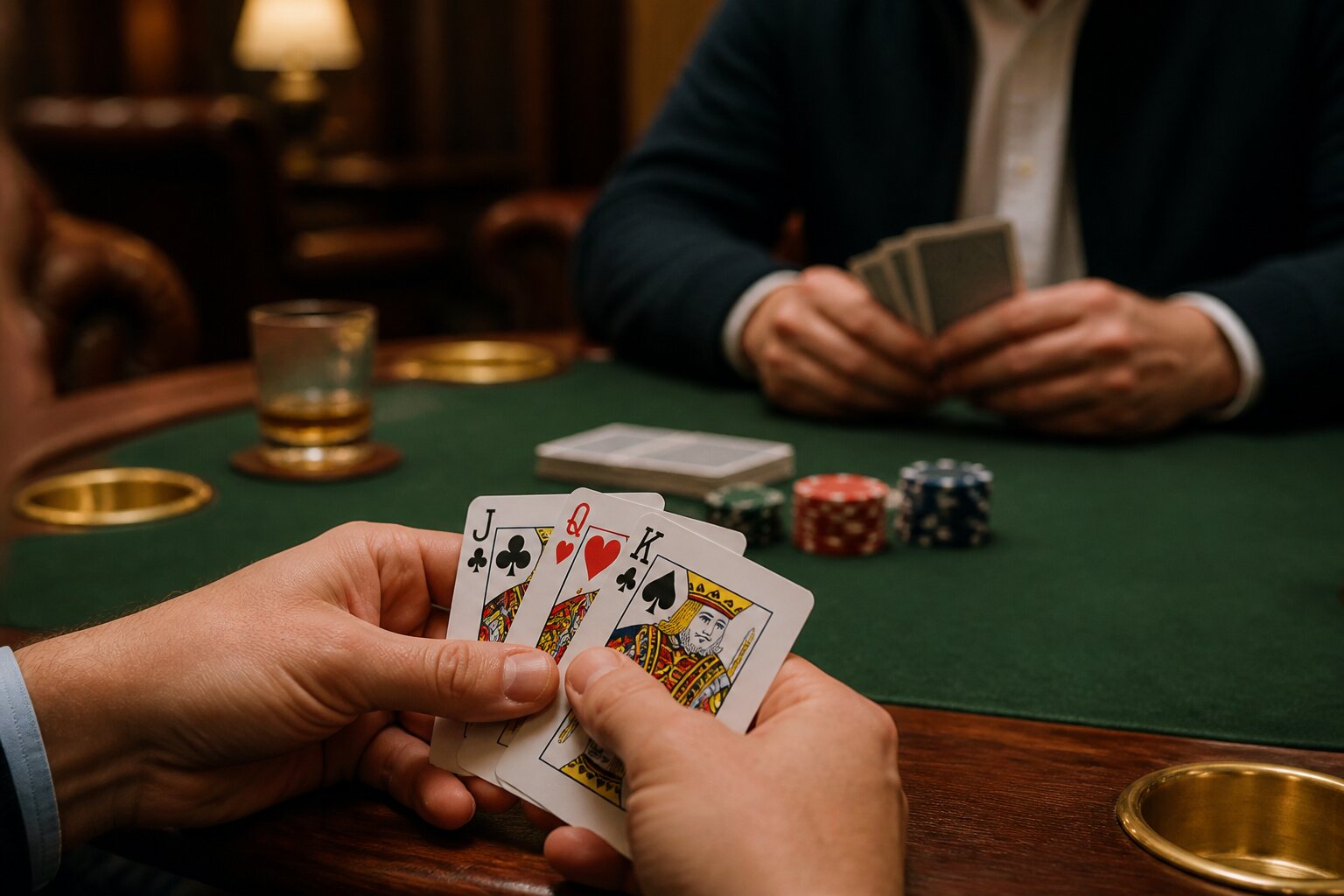
Ever felt confused by the ranking of hands in 3 Card Brag? You are not the only one. The order in this classic British card game can surprise players who are used to poker.
Knowing which hands beat which is essential whether you want to bluff convincingly, judge when to bet, or simply get more from social games with friends. This guide sets out the hand order clearly and gives practical examples so you can spot your position at the table more quickly.
What Is 3 Card Brag?
3 Card Brag is a traditional British card game with a long history. Each player receives three cards face down, then there is a round of betting where players may call, fold, or raise. The aim is to have the strongest hand at showdown or to persuade others to fold.
The game rewards careful reading of opponents and smart decision making, with an element of chance in which cards are dealt. It is usually played socially and can move quickly from round to round. Below I explain the hands in the order you need to learn next so you can judge a hand’s strength at a glance.
Standard Hand Rankings in 3 Card Brag
Hand rankings in 3 Card Brag differ from many poker variants, so a quick reference is useful. The list below runs from the strongest hand to the weakest, with examples and approximate odds to give context about how often each will appear.
Prial: The Strongest Hand
A prial, short for pair royal, is three cards of the same rank and is the top hand in 3 Card Brag. Prials are rare and usually win a large pot when they do appear.
Examples: three 3s, three Aces, three Kings.
Approximate odds: 1 in 425.
This sets the tone for how high-value hands compare, and the next highest is a running flush.
Running Flush and Straight Runs
A running flush, also called a straight flush or straight run, is three consecutive cards all of the same suit. It sits just below a prial in the ranking.
Examples: 4, 5, 6 of hearts; 10, J, Q of spades.
Approximate odds: 1 in 459.
After this comes the separation between flushes, runs, and pairs, each of which plays differently in hand comparisons.
Flushes, Straights, and Pairs
A flush is any three cards of the same suit that are not consecutive. A run, sometimes called a straight, is three consecutive cards of mixed suits. A pair is two cards of the same rank plus an unrelated third card.
Examples and rough odds:
- Flush: 2, 5, 9 of diamonds; about 1 in 22.
- Run: 5 of hearts, 6 of spades, 7 of diamonds; about 1 in 31.
- Pair: 8 of clubs, 8 of hearts, 2 of spades; about 1 in 6.
These hands make up the middle range of the game, where betting and bluffing often decide the outcome more than card strength alone.
High Card: The Lowest Value
When none of the combinations above are present, the highest individual card determines the hand’s strength. High card hands are common and often settle small pots.
Examples: King, 9, 5; Queen, 10, 7.
Approximate odds: roughly 1 in 2 for any hand to be just a high card.
Understanding these relative strengths lets you judge how aggressive you should be in a particular round. The next section explains how to recognise those hands quickly when they are in your own hand.
How to Recognise the Best and Worst Hands?
Recognition is a practical skill: pick up your three cards and scan for the clearest combinations first. Look for three of a kind, which ends the search quickly. If that is not present, check whether the cards are consecutive and share the same suit for a running flush.
If not, see if the cards are consecutive with mixed suits for a run, or all the same suit for a flush. Then check for a pair, leaving high card only if none of the above apply. Being methodical in that order reduces hesitation during betting and helps you read potential threats from opponents’ actions.
Real examples help make this automatic: a hand of 3, 3, 3 beats any other hand; 7, 8, 9 of clubs beats a pair and a plain flush; 5, 6, 7 of mixed suits beats a pair but loses to a running flush. Practising these quick checks will speed up your decisions and sharpen your table sense. The next section compares these ranks with three-card poker to highlight the key differences.
3 Card Brag Order (strongest to weakest)
Below is the standard 3 Card Brag order, shown with a simple example for each rank. This quick list makes it easy to compare hands at a glance. Note that suits do not affect the ranking of hands; cards are compared by their face value when breaking ties.
Prial: Q♠ Q♦ Q♣
Running Flush: 5♣ 6♣ 7♣
Run: J♦ Q♣ K♠
Flush: 2♦ 6♦ 10♦
Pair: 9♣ 9♠ 3♦
High Card: A♠ 7♣ 2♦
Gamble responsibly and only play within your means. If you have concerns about gambling, seek help from a recognised support organisation.
Poker (Three Card variant) Order (strongest to weakest)
Three-card poker orders hands differently in a couple of key places. This list highlights where the most important changes occur so you can switch between games without confusion.
Straight Flush: 5♣ 6♣ 7♣
Three of a Kind: Q♠ Q♦ Q♣
Straight: J♦ Q♣ K♠
Flush: 2♦ 6♦ 10♦
Pair: 9♣ 9♠ 3♦
High Card: A♠ 7♣ 2♦
The most notable change is which of the top two hands ranks higher. In three-card variants, the straight flush is the ultimate hand and ranks above three of a kind, which is the reverse of some multi-card poker games. This difference affects how you value certain hold situations and what to look for when assessing opponents' likely holdings.
Being aware of this ranking shift makes it easier to adapt tactics when moving between brag and poker styles. Small adjustments to betting and bluffing choices can follow naturally once you are clear on which hands are more powerful in each variant.
Why Is Knowing the Hand Order Important?
Knowing the order of hands affects both the practical flow of play and how to assess risk during betting. If the early betting is heavy and your holding is a pair, you can judge that stronger combinations remain possible at the table and decide whether to stay or fold. Conversely, holding a prial or running flush justifies more assertive betting because those hands are seldom beaten.
Clear knowledge of the order also prevents disputes and speeds up showdowns. Finally, understanding where your hand sits in the ranking helps you manage stakes more sensibly so play remains within personal limits and enjoyment remains the priority.
With a firm grasp of these rankings and a little practice spotting combinations quickly, playing 3 Card Brag becomes more engaging and less guesswork. Enjoy the game, keep decisions clear, and the hands will start to make more sense as you play.
Play Online Casino Games at Bonanza Slots
We’d love to welcome you to our site, where you can enjoy the excitement of online casino games in a friendly, enjoyable setting. At Bonanza Slots, we offer a space where you can unwind and have a bit of fun at your own pace.
Getting started is straightforward—just create an account, make a deposit, and you’ll be ready to explore what we have to offer. We’re here to make your experience as smooth as possible, so settle in and enjoy your time with us.
**The information provided in this blog is intended for educational purposes and should not be construed as betting advice or a guarantee of success. Always gamble responsibly.