
Ever wondered why some blackjack tables seem to play differently from others? A lot of that comes down to the number of decks in the shoe and how the cards are handled.
This article breaks down what a shoe is, why casinos use multiple decks, and how that affects the game experience. Read on to get the clarity you need before choosing a table.
What Is a Blackjack Shoe?
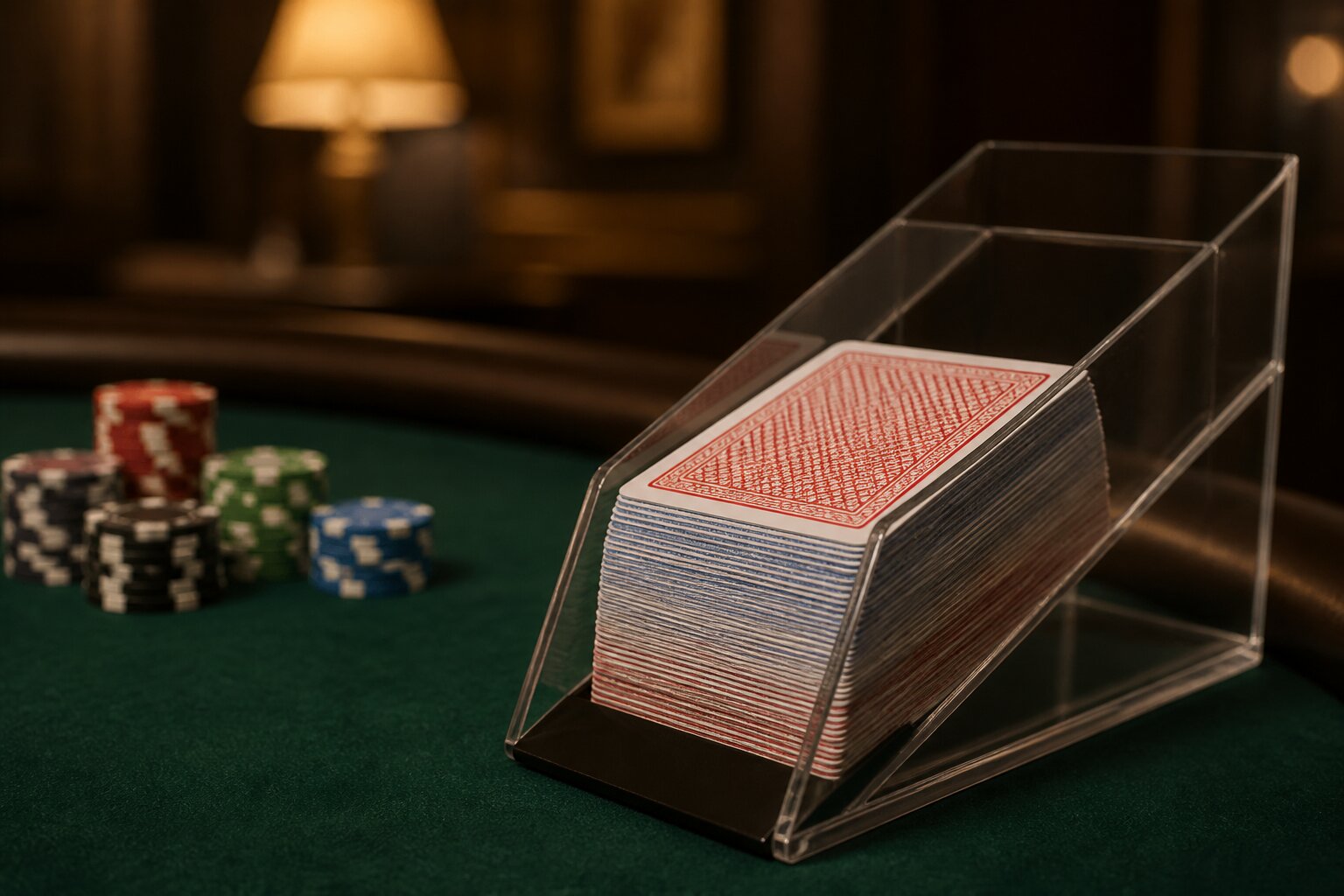
A blackjack shoe is a hinged or box-like device that holds several decks of cards together so the dealer can draw them one by one. It helps keep the cards organised and in good condition during play, protecting edges and stopping cards from being bent or otherwise damaged.
Shoes are usually made from plastic or a combination of plastic and metal, and most often hold between six and eight decks. Many casinos also use a cut card placed partway through the stack to mark where the dealer should stop dealing, which reduces the chance of playing with the final exposed cards.
Beyond convenience, the shoe changes how the game is run. It:
- prevents players or staff from reshuffling between every hand, which speeds up play and keeps outcomes consistent
- reduces the chance of marked, swapped or otherwise tampered cards being introduced during a session
- standardises dealing across many hands, making it easier for staff to follow house procedures
Those practical benefits are why shoes are common at casino tables, especially when multiple players are involved. They support efficient, orderly play and help maintain fairness and integrity at the table.
How Does a Blackjack Shoe Work?
When play begins, freshly shuffled decks are stacked inside the shoe and positioned so the dealer pulls cards off the front. Because cards are drawn from a single slot, the order is preserved and visible to those at the table, which helps with transparency.
The shoe also usually pairs with a cut card: a brightly coloured insert that marks where the dealer will stop dealing before a reshuffle. This system helps the casino control when the decks are changed, and it keeps rounds flowing smoothly by minimising interruptions for manual shuffling.
Used together, the shoe and cut card create a consistent dealing method that protects the integrity of each hand while allowing the game to proceed at a steady pace.
How Many Decks Are Used in a Blackjack Shoe?
Shoe capacities most commonly range from four to eight decks, with six-deck tables appearing frequently in many venues. Some games use fewer decks, particularly promotional or specialty tables, while larger-scale tables may opt for eight decks to serve more players between shuffles.
The choice of deck count is a balance between operational convenience and the style of play the house wants to offer. Different venues and table rules will set the number to fit their preferred needs, such as:
- the desired pace of play
- seating capacity and how many hands can be dealt before a shuffle
- oversight and card-management preferences for the dealer and floor staff
Deck count can also influence practical elements like shuffle frequency and shoe size, which affect how long a shoe lasts and how often dealers need to replace it. These factors are organisational rather than a recommendation to play, and venues must follow local regulations and responsible gambling guidelines when offering games.
Why Do Casinos Use Multiple Decks in Blackjack?
Using several decks helps casinos maintain a standardised game environment across many hands and players. With more cards in play the shoe lasts longer, so the dealer does not need to stop and reshuffle as often. That keeps rounds moving, reduces downtime and allows the table to serve more players per hour.
Multiple decks also alter the composition of the card pool. With a larger mix of cards the frequency of particular combinations changes compared with single-deck play. That shift is part of the game’s structure and is not something players can change while they are playing.
Broadly, casinos favour multiple decks for practical and regulatory reasons:
- maintaining a consistent playing format across tables and sessions
- reducing the number of reshuffles to keep play continuous
- changing the card composition to support established house rules and payouts
- lowering the effectiveness of some detection techniques used by advantage players
- improving operational efficiency for staff and management
Ultimately, the setup aims to deliver fairness and operational efficiency while offering a predictable format for rule enforcement and oversight. The use of multiple decks is a deliberate design choice to balance game integrity, practical service needs and regulatory requirements.
What Are the Benefits and Drawbacks of Using a Shoe?
A shoe brings a number of practical advantages: it preserves card condition, standardises dealing, and lowers opportunities for improper handling. For the dealer, it simplifies handling several decks at once; for the house, it supports consistent enforcement of rules.
On the other hand, a shoe can make the game feel less intimate than single-deck play. Players who prefer the rhythm of frequent shuffles or who enjoy the visual simplicity of fewer cards may find multi-deck tables less appealing. There’s also a subtle effect on the mathematical structure of the game—differences that are deliberately accounted for in table rules rather than being exploitable by players.
Is It True That the Number of Decks Changes the Game Odds?
Deck count does influence the mathematical characteristics of blackjack. Increasing the number of decks alters the frequency of specific card sequences, which produces small shifts in the house advantage. These are technical adjustments built into the game rules and payouts; they’re not variables players can reliably control mid-session.
Understanding that the deck count is one of several parameters that shape the game helps set realistic expectations. Table rules, payout structures and dealer procedures combine with deck number to form the overall game environment.
Common Misconceptions About Deck Numbers
One common misunderstanding is that fewer decks automatically give players a decisive edge. In truth, while some statistical measures move slightly with deck count, they remain part of the game’s fixed mathematics. Another myth is that simply knowing the number of decks will let someone consistently alter outcomes; in regulated play, safeguards and reshuffle procedures prevent that.
These points are often overstated in casual conversation, so it’s useful to treat deck count as one informative detail among many when choosing where and how to play.
Single Deck vs Multi-Deck Blackjack: What Are the Differences?
Single-deck games use one 52-card pack, which tends to create a different tempo. There are more frequent shuffles and the card mix changes rapidly from hand to hand. That can feel familiar to players who are used to home games and to those who prefer a quicker reset between hands.
Multi-deck blackjack, handled with a shoe, spreads card combinations over a larger pool. This supports more seating and longer runs between shuffles, which makes it practical in busier settings such as casinos. The larger card pool also smooths out short-term variance, so individual hands feel less affected by the previous few cards.
While most rule sets are transferable between single- and multi-deck tables, the playing experience differs in some clear ways:
- Single-deck play often feels more transparent and tactile, because every card dealt changes the visible composition of the deck more noticeably.
- Shoe play feels more structured and continuous, with fewer interruptions for shuffling and a steadier rhythm to the session.
How to Recognise the Number of Decks in a Casino Blackjack Shoe
Table information is typically displayed as part of the table layout or on nearby signage, where the number of decks and key rules are listed. Dealers will also be able to confirm the deck count if you ask; they prepare the shoe according to the table’s posted rules.
Visually, a shoe with several decks appears fuller than one with a single pack, but appearances can be deceptive because of different shoe designs. The safest approach is to check the posted details or confirm with staff before sitting down so you know the game format and can choose the table that suits you.
Conclusion: What Should Players Know About Blackjack Shoes?
The shoe is a simple but important element of table blackjack. It organises multiple decks for uninterrupted dealing, supports fair procedures and defines the game’s tempo. Deck count affects the statistical shape of play in small, predictable ways, and it’s one useful factor to consider when picking a table.
If anything about the table setup isn’t clear, a quick question to staff will usually clear it up. Make choices that match your comfort with the format, and play within limits you set for yourself. Thanks for reading — I hope this helps you feel ready to spot the differences between single- and multi-deck games next time you play.
**The information provided in this blog is intended for educational purposes and should not be construed as betting advice or a guarantee of success. Always gamble responsibly.