
Ever wondered just how much cash you could win, or lose, at a slot machine? It’s a common question among new and experienced casino visitors.
There’s more to slot machines than flashing lights and ringing bells. Understanding how much these machines can hold and pay out gives a clear view of the practical side of casino operation and helps set realistic expectations.
Read on to learn what determines a slot’s payout capacity, how machines are serviced, and what limits you might encounter when claiming larger wins.
What Determines the Cash Capacity of a Slot Machine?
The cash capacity of a slot machine is carefully designed and regulated to ensure safety and transparency.
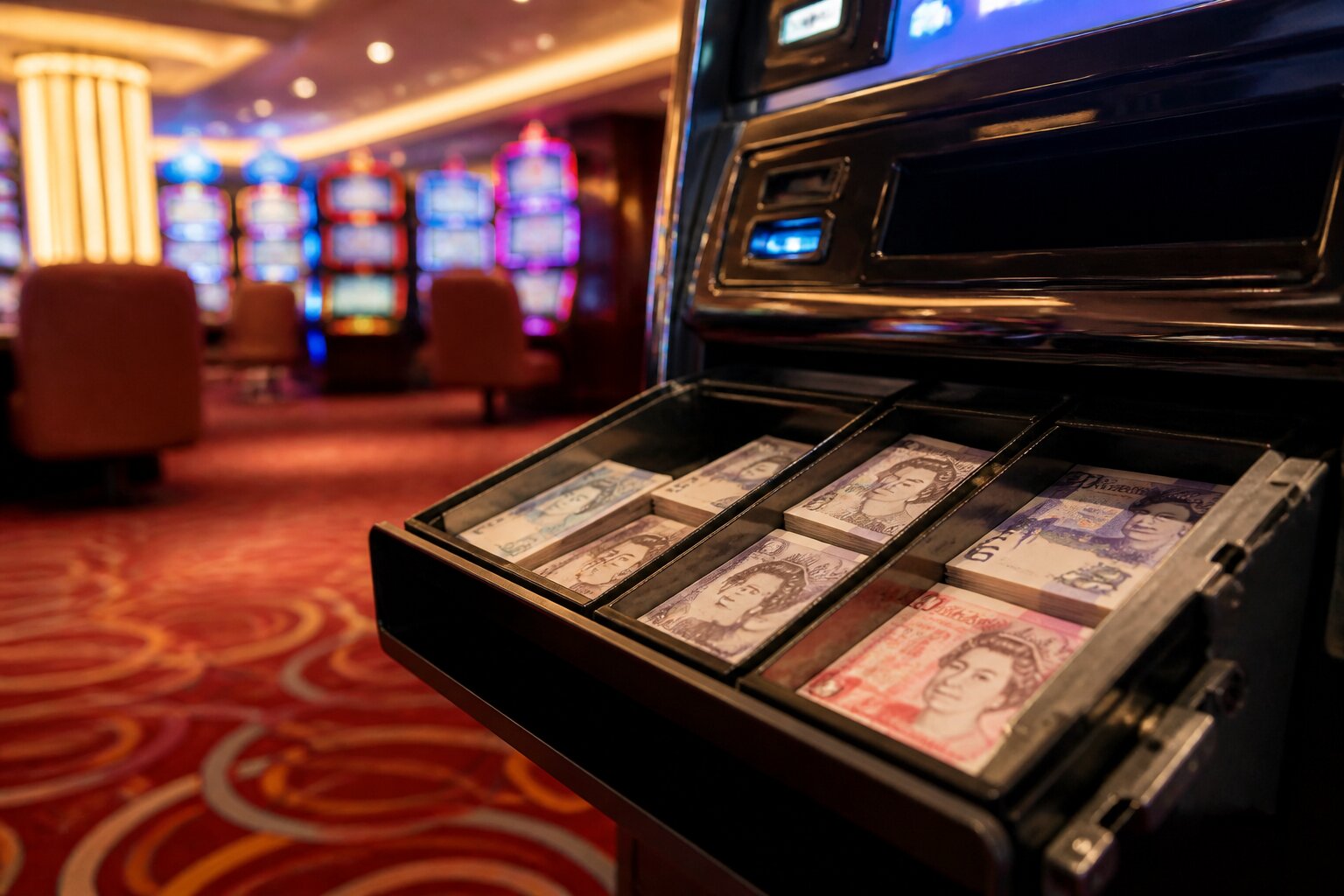
A core factor is the physical safe inside the machine, where notes and coins are stored. That safe has a fixed capacity and is manufactured to secure only a specific amount of cash. Similarly, the hopper is the mechanism that stores coins for payouts; it can only hold a set number of coins before staff need to intervene.
Ticket-in, ticket-out technology has changed the picture. Modern machines often pay out with printed tickets instead of coins, which reduces reliance on large hoppers and makes payouts smoother. Alongside this, casino management systems track how much each machine holds and trigger staff action when limits are approached. These digital records are part of regulatory oversight and help keep handling efficient and auditable.
Together, these elements mean a machine’s cash on hand is always limited and closely monitored rather than arbitrary.
Difference Between Coin and Note Slot Machines
Slot machines have evolved, and the way they handle money has changed with that evolution.
Coin-based machines pay out in coins and need regular manual handling. Staff collect and refill coins frequently, and those machines tend to require more hands-on maintenance. Note-accepting machines use note recyclers that can accept and sometimes dispense banknotes, allowing larger value to be stored securely and reducing the need for constant servicing.
Because of these differences, operational routines vary: coin machines demand more frequent attention, while note recyclers allow longer intervals between service visits. Both types must meet the same legal and safety standards, and age restrictions apply so only those aged 18 or over may play.
If you’re curious about how machines are kept secure and cash is moved, the next section explains the checks in place.
How Are Slot Machines Emptied and Refilled?
Cash handling in casinos follows strict procedures to protect funds and maintain transparency.
Only authorised, trained staff access a machine’s cash compartments, and those actions are logged and regularly audited. Work is carried out under CCTV and electronic tracking so every event is recorded. Typically, two members of staff are involved when accessing cash to reduce the risk of error or misconduct.
Once cash is removed, it is counted in secure back-office areas using counting machines, with records updated to match electronic logs. These measures ensure a clear chain of custody and help operators detect and investigate any irregularities quickly.
Security measures are practical and routine rather than intrusive, and they exist to protect both the operator and the player.
Security Measures for Handling Slot Machine Cash
Security is central to cash-handling procedures. Staff work in pairs when opening cash compartments, and all activity is monitored by cameras. Transport of funds to secure counting areas follows defined routes and uses locked containers, and counting is carried out with machines that minimise human error.
Electronic records and periodic audits support these physical steps, creating overlapping controls that make the whole process resilient and traceable.
There’s an operational reason for all this: it keeps the machines functioning reliably and ensures that payouts are handled correctly when large sums are involved.
Casino Payout Limits: How Much Can You Really Win?
Casinos set payout limits to manage cash flow and to keep operations orderly. Limits vary by machine and venue, and they reflect both the machine’s physical capacity and the operator’s policies.
Some machines will have a maximum payout per transaction, which might be a few hundred pounds or several thousand, depending on the machine. If a win exceeds the machine’s immediate payout capability, staff will process the remainder through alternate methods such as a bank transfer or written claim. Operators may also apply daily or weekly payout caps to manage larger claims.
These controls don’t change how the game functions — they simply determine the practical way winnings are returned to a player. If you ever encounter a large win, staff will explain how the payout will be completed so you know what to expect.
Does Machine Capacity Impact Payout Frequencies?
It may seem intuitive to link how full a machine is with how often it pays out, but the two are unrelated.
Payout frequency is determined by the game’s mathematics and the Random Number Generator (RNG) that governs outcomes. That software is tested and certified so each spin is independent of previous results and independent of the machine’s cash level. The physical amount of cash in the safe or hopper does not alter those programmed odds.
In short, cash capacity is a logistical matter: it affects how payouts are delivered, not the likelihood of a win on any given spin.
Common Myths About Slot Machine Jackpots
There are several persistent myths about jackpots and machine behaviour; most stem from trying to find patterns where there are none.
One common belief is that a machine is “due” a jackpot after many losing spins. In reality, each spin is independent, and past results do not influence future outcomes. Another myth suggests a machine that recently paid out is now “cold” and less likely to pay again; the machine’s recent history is not predictive. People sometimes think a full cash cabinet makes a big win more likely, but as noted earlier, cash levels do not affect the underlying game mechanics.
Understanding these points helps set realistic expectations: big wins can and do happen, but they follow the game’s established rules rather than any external cue.
If you want further clarity on how games are tested or how odds are presented, the next section offers practical information on where to look and what to ask.
Responsible Gambling and Payout Information for UK Players
Playing should be an enjoyable activity within personal limits. UK rules require operators to provide tools and information that help players manage their play responsibly.
Licensed venues offer options such as deposit limits, reality checks, and self-exclusion schemes. These are practical tools that let players control spending and stick to the budget they set. If gambling stops being enjoyable or you need advice, support organisations such as GambleAware and GamCare provide confidential help and guidance. Staff at licensed venues can also explain the responsible gambling measures in place and how to use them.
We aim to offer clear, practical information so players can make informed choices and understand how payouts are handled. If you have any questions about payout limits or support options, our team is available to help.
**The information provided in this blog is intended for educational purposes and should not be construed as betting advice or a guarantee of success. Always gamble responsibly.