
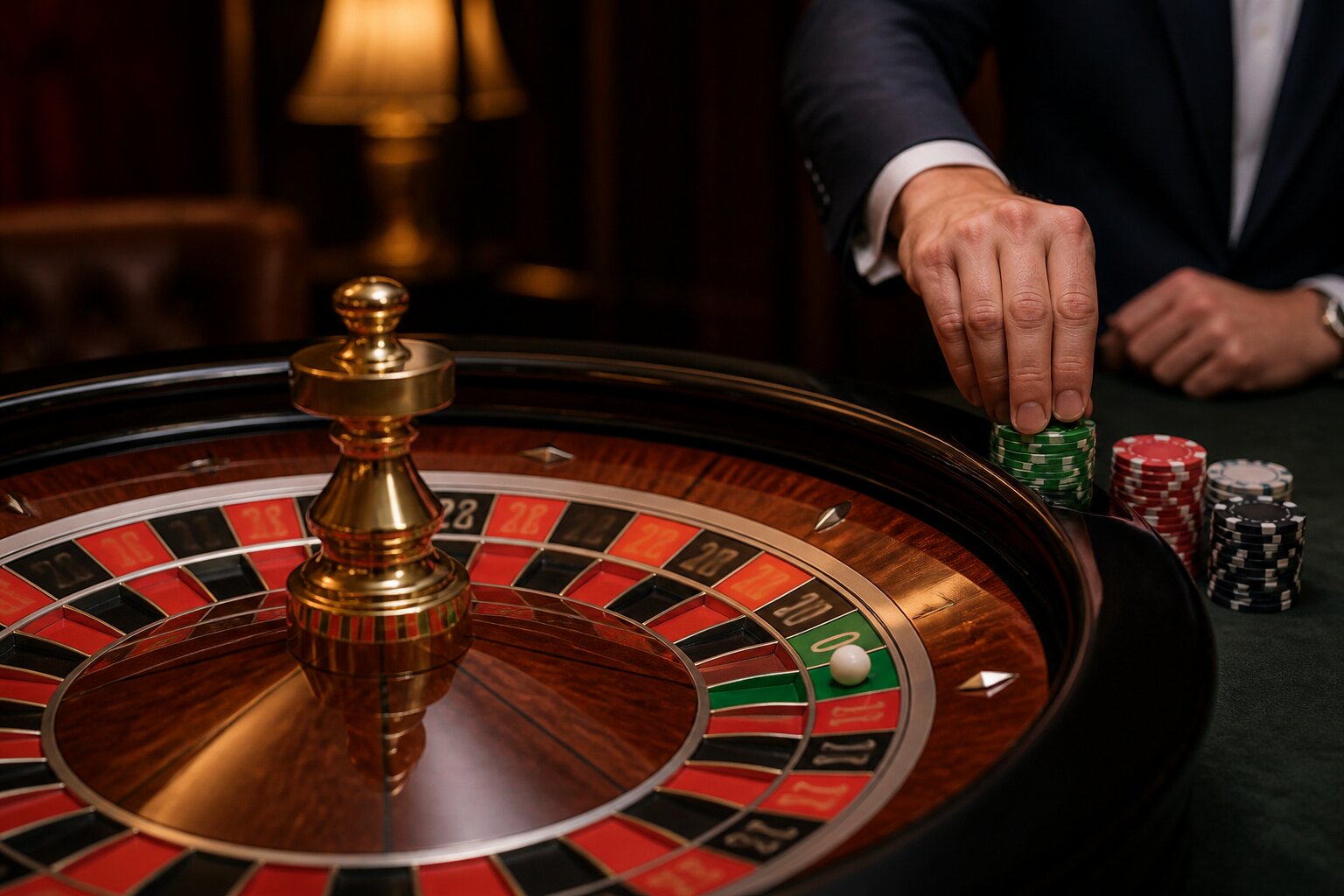
Ever noticed that single green zero on the roulette wheel and wondered if it's worth a punt? You’re not alone. For many players, the zero feels mysterious—sometimes decisive, sometimes simply the pocket that changes outcomes.
Betting on zero can alter how a spin plays out, but it only makes sense when you understand what it represents and how it interacts with other bets. Read on to see the true odds, typical payouts, and practical considerations for when (and why) you might include zero in your play.
What Does Zero Represent in Roulette?
Zero is the green pocket on every roulette wheel and is separate from the standard red and black numbers. It is not included in the common outside bets such as red/black, odd/even, or high/low, so it changes how those bets resolve when it appears.
European and French roulette wheels have a single zero. American roulette adds a double zero, so there are two green pockets in total. Because zero is excluded from even-money outside bets, it creates the casino’s edge by making those bets slightly less likely to win than they might appear.
Zero is just another numbered pocket, but its position outside the most common bet options makes it a key factor in both odds and strategy.
How Often Does Zero Come Up in Roulette?
Each spin is an independent event, and the chance of the ball landing on a single number, including zero, is fixed by the wheel’s layout.
On European and French roulette there are 37 pockets (numbers 1–36 plus 0), so the probability of zero on any spin is 1 in 37, or about 2.7%. On an American wheel there are 38 pockets (1–36, 0, and 00), so a single zero has a 1 in 38 chance, or roughly 2.6%; the double zero shares the same individual probability.
Because spins are independent, previous results do not change these odds. Patterns observed in recent outcomes do not alter the likelihood of zero turning up on the next spin.
What Are the Odds of Zero in Different Roulette Games?
The basic probability of zero depends on the number of pockets on the wheel, but the role zero plays remains consistent across versions. It is a single numbered outcome that can affect certain bets differently from the red/black and odd/even numbers.
European Roulette
The European wheel has one zero among 37 pockets, so a straight-up bet on zero has odds of 1 in 37, about 2.7%. That is the same chance whether you place a chip directly on the zero or use a straight-up bet on a betting layout.
Because there is only one zero, the overall house advantage on many outside bets is lower than on a double-zero wheel. This is why single-zero games are often preferred by players looking for lower mathematical house edge, while remaining subject to the usual rules and limits set by the operator and regulators.
American Roulette
An American wheel introduces a double zero, producing 38 pockets. A straight-up bet on a single zero is 1 in 38, about 2.6%. The double zero is treated as a separate outcome with the same probability.
The extra double zero increases the number of losing outcomes for many common bets, which raises the house advantage compared with single-zero wheels. That difference in edge is the main mathematical reason many jurisdictions and players favour single-zero versions when they are available.
French Roulette
French roulette uses the same single-zero wheel as European roulette, so the straight-up odds for zero are the same, 1 in 37. French tables sometimes apply special rules to certain outside bets when zero appears; these rules affect only those outside bets, not a straight-up wager on zero itself.
Common French rules include:
- La Partage, where even-money outside bets lose only half their stake when the ball lands on zero.
- En Prison, where even-money outside bets are left "in prison" for the next spin and may be returned if that spin wins.
These rule variations reduce the effective house advantage on qualifying outside bets but do not change the probability of zero appearing.
These differences explain why many players prefer single-zero wheels if they want lower overall house advantage. Remember that all roulette outcomes are random and that gambling should be undertaken responsibly and in line with local laws and licensing requirements.
What Payouts Can You Expect for Betting on Zero?
A straight-up bet on zero pays 35 to 1. That means a £1 stake returns £36 in total (your £1 stake plus £35 winnings) if the ball lands on zero. This is the standard payout on single-zero European roulette tables.
Zero can also be part of combination bets, which cover more than one number and therefore pay less. For example:
- A split covering zero and 1 pays 17 to 1.
- A corner or square that includes zero pays 8 to 1.
Those lower payouts reflect the wider coverage of numbers and the higher chance of winning such bets. Payouts may vary slightly between American and European wheels, and some tables apply specific house rules that affect winning combinations.
House rules can vary slightly between tables, so it is sensible to check the paytable before you play and to be aware of the table type and any special rules that apply.
How Does Zero Affect Other Bets on the Table?
Because zero is not covered by the usual outside bets, it causes those wagers to lose when it appears. This exclusion is the source of the house edge on even-money bets. On single-zero wheels the edge from zero is about 2.7%, while the extra double zero on American wheels increases the edge to roughly 5.3%.
Zero’s presence changes the effective probability of winning many common bets and therefore should be part of any assessment of a table’s overall odds and risk.
To move smoothly into the next points, it helps to consider both the numerical chances and how payouts change when you decide to place a chip directly on zero.
Should You Place Bets on Zero for Fun or Strategy?
Including zero in your bets can be a deliberate choice for variety rather than a reliable path to profit. Some players place a single chip on zero as a high-odds, high-payout option; others include zero in covering patterns of numbers.
There are no methods that can change the fixed probabilities of a properly run wheel. If you prefer the occasional straight-up stake on zero for the potential payout, treat it as part of an overall plan that balances risk across your session.
Make decisions that fit the size of your stake and how much variance you are willing to accept, rather than expecting any guaranteed return.
Common Myths About Betting on Zero in Roulette
A number of misconceptions surround zero. One widespread idea is that zero becomes “due” after a run of other numbers. Because each spin stands alone and is independent, this is incorrect; past results do not change the probability of future spins.
Another common belief is that visual patterns or wheel markings can reliably predict zero. In regulated play, outcomes are designed to be unpredictable in that way, whether on a physical wheel properly maintained or on a certified random number generator.
Finally, many people think betting systems can overcome the house edge. While systems can change the pattern of wins and losses in the short term, they do not alter the underlying probabilities or the built-in advantage the game provides to the operator.
To make these points clearer, the main misconceptions are:
- Zero becomes more likely after a run of non-zero results.
- Visual patterns, wheel markings or similar cues can predict zero.
- Betting systems can eliminate the house edge and guarantee long-term profit.
Knowing these facts helps separate practical choices from unfounded expectations. It supports safer, more informed decisions and reminds players that chance and the house margin remain central to roulette outcomes.
Tips for Betting Responsibly on Zero
If you include zero in your play, a measured approach keeps the activity enjoyable and manageable.
Decide in advance how much you are prepared to stake and how long you will play. Keep bets proportional to that plan so individual wins or losses do not force changes to your limits. Use any available tools on the platform you’re using to set deposit or time boundaries if that suits you. If play stops being enjoyable or it begins to affect other parts of life, help is available from confidential support services.
Roulette can be entertaining when approached with clear limits and awareness of how zero influences outcomes. Play within your means and make choices that keep the experience positive.
Final word: zero is a distinct pocket with clear odds and payouts; understanding its role helps you make informed choices about whether and how to include it in your bets.
**The information provided in this blog is intended for educational purposes and should not be construed as betting advice or a guarantee of success. Always gamble responsibly.