
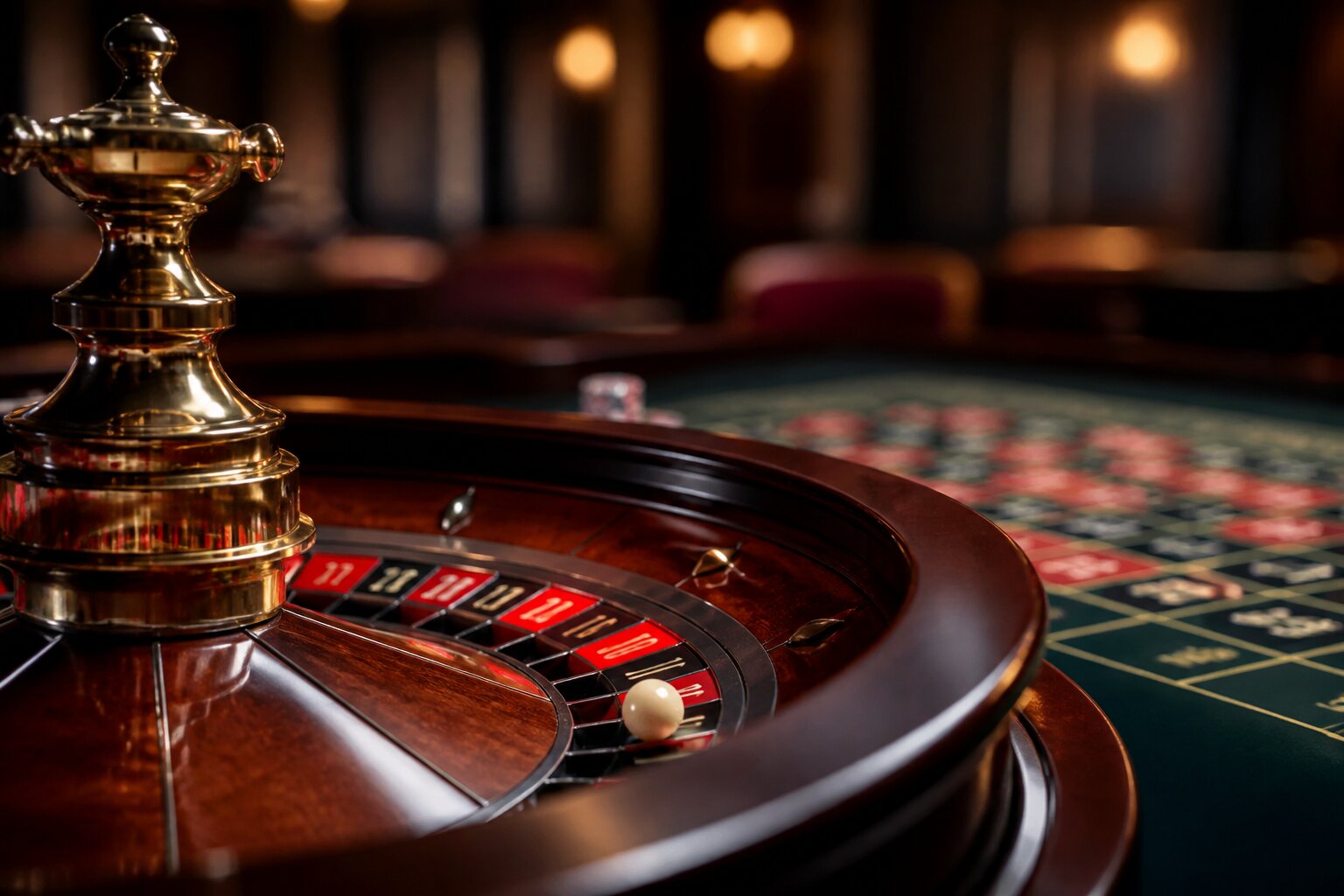
Roulette is one of the most recognised casino games, with a simple-looking table and a wheel that draws people in. Place your chips, watch the ball circle the wheel and wait for the result — the game is easy to join and immediate to follow.
Still, that simplicity hides some common misunderstandings, especially about betting on red and black. Before your next spin, it helps to know what these bets actually mean and which ideas about them are myths. Read on to separate fact from fiction and understand how the odds really work.
What Does Betting on Red and Black Really Mean?
Betting on red or black is an “even money” wager on the roulette layout. Each colour covers 18 numbers on the wheel, so a bet on red wins if the ball lands on any red number; a bet on black wins if it lands on any black number. If the ball lands on a green zero, neither red nor black wins.
Payouts reflect this simplicity: a winning even-money bet returns the stake plus an equal amount. For example, a £5 bet on red that wins gives back the original £5 and £5 in winnings. However, the presence of green pockets changes the underlying probabilities, so these bets are not identical to a coin toss. Understanding this distinction helps make sense of many of the myths that follow, starting with the idea that the game is a perfect 50/50 contest.
Debunking Popular Misconceptions About Roulette Colours
When a game looks straightforward, it’s tempting to rely on easy explanations or quick rules of thumb. That’s where myths take hold. Below are the most common misunderstandings about red and black bets and why they don’t stand up.
Red and Black Bets are Not a 50/50 Chance
People often liken red or black bets to tossing a coin, but the green zero pocket prevents a clean 50/50 split. In European roulette there are 37 pockets in total — 18 red, 18 black and 1 green zero — so the chance of a red or black result is 18/37, or about 48.65%. In American roulette there are two green pockets (zero and double zero), reducing the chance to 18/38, or about 47.37%. That small gap between the player’s win probability and 50% is where the house edge comes from.
The Roulette Wheel Remembers Past Spins
The notion that the wheel “remembers” previous outcomes is a misconception. Every spin is an independent physical event driven by the initial forces applied to the wheel and ball. Patterns can appear by chance over short runs, but those sequences do not influence the next spin’s probabilities. Treating each spin as separate avoids fallacies that lead to poor decisions.
Chasing Streaks Guarantees a Win
Systems that urge increasing stakes after losses — frequently discussed among players — do not change the underlying probabilities of the game. While such approaches can sometimes return a small win after a run of losses, they can also accelerate losses beyond a player’s budget or table limits. The risk is not that a strategy is mathematically impossible but that it can be practically unsafe when limits and variance are taken into account.
The Colour of the Ball Makes a Difference
The idea that a ball’s colour alters outcomes is unfounded. The ball’s material, size and condition matter for fairness and performance, but the colour itself does not affect how the ball behaves. Operators replace and maintain balls for consistent play, not to favour a particular result.
With those misconceptions cleared up, the next question is how payouts for red and black actually function and what they mean for a player’s experience.
How Do Roulette Payouts Work for Red and Black?
Payouts on red and black are straightforward: they are even-money bets, so a win returns the stake plus an amount equal to that stake. This simplicity makes these wagers easy to follow and appealing for players who prefer regular, predictable payouts.
Even so, the payout structure must be viewed in the context of the win probability. Because the green zero pockets remove outcomes from the red/black split, the expected return on these bets is slightly negative over the long run — the house retains an edge. For example, in European roulette the theoretical return on even-money bets is about 97.3% of stakes over time; in American roulette it is lower because of the extra green pocket.
Understanding expected return helps set realistic expectations: frequent small wins are possible, but they coexist with an overall statistical disadvantage. Next, consider the single feature that most directly creates that disadvantage — the green zero — and how it shapes play.
Exploring the Role of the Green Zero
The green zero is unique because it belongs to neither red nor black. When the ball lands on zero (or double zero in American roulette), all red and black bets lose. That single rule changes the probabilities enough to create the house edge in even-money wagers.
In European wheels the single zero produces a modest house edge; the double-zero on American wheels increases it further. The presence of zero pockets also explains why some betting patterns that look sensible in the short term do not alter long-term expectation. Players should bear this structural feature in mind when choosing how to play and when setting personal budgets. With the zero understood, it becomes clearer why some strategies appeal but do not improve long-term outcomes; the next section looks at whether focusing only on red or black is a practical choice.
Should You Only Bet on Red or Black?
Betting exclusively on red or black is a legitimate and simple approach. It offers frequent resolution of bets and a relatively steady rhythm to play. For many players, that predictability is the main appeal: it makes it easy to follow outcomes and control how much is staked each round.
However, relying solely on these bets does not change the statistical disadvantage created by green zeros. Over extended play the house edge means losses are likely to accumulate gradually. That reality suggests a practical balance: using red/black bets to enjoy the pace of the game while setting firm spending limits and timeframes. Approaching roulette this way keeps sessions intentional and helps preserve enjoyment.
Deciding whether to play other wager types or stick with even-money bets depends on individual preferences: some players accept greater variance for the chance of larger payoffs, while others favour regular, smaller results. Either choice is valid when it fits a clear plan and a set limit.
Final thought: understanding the mechanics behind red and black bets — the actual odds, the role of the green zero and the limits of betting systems — gives you a clearer picture of what to expect at the table and helps keep play within sensible limits.
Enjoy Casino Games at Bonanza Slots
At Bonanza Slots, we welcome you to be part of our friendly community, where everyone can enjoy a relaxed and safe gaming experience. Our site is designed for comfort and ease, so you can simply focus on having fun and feeling connected.
**The information provided in this blog is intended for educational purposes and should not be construed as betting advice or a guarantee of success. Always gamble responsibly.